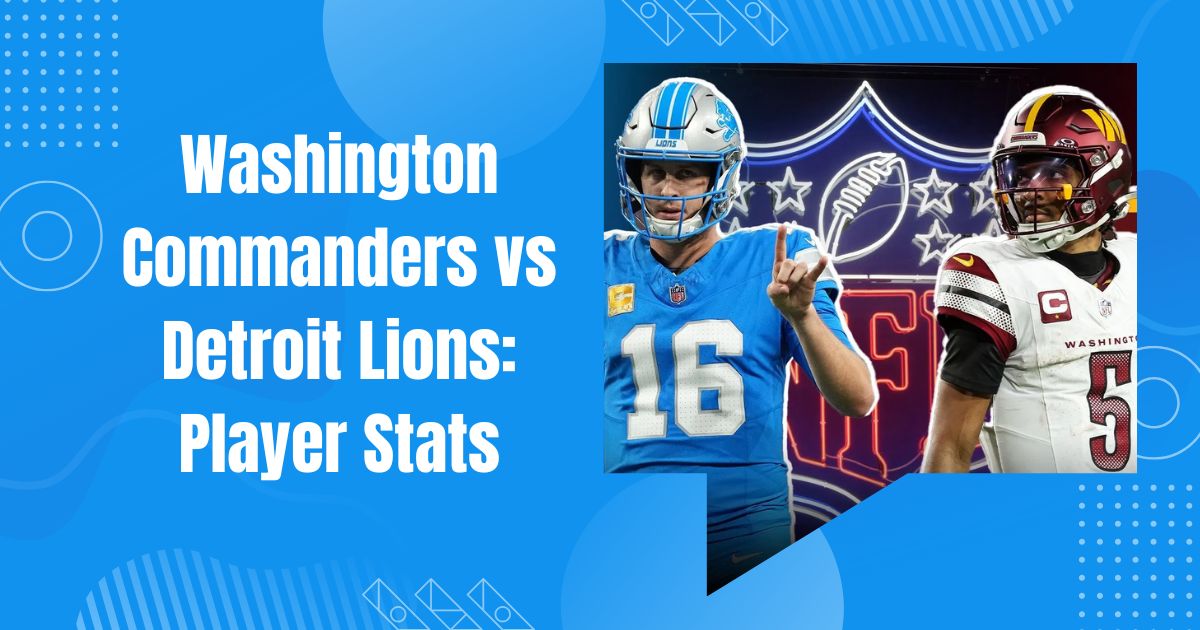
The Washington Commanders vs Detroit Lions matchup showcased an engaging NFL battle featuring tactical execution, standout performances, and game-changing plays. Both franchises arrived determined to validate their development, with the outcome highlighting their contrasting approaches. Detroit emphasized consistency and balance, while Washington demonstrated resilience and flexibility. The contest provided valuable perspective on each squad’s capabilities, vulnerabilities, and trajectory.
Quick Match Summary
| Team | Q1 | Q2 | Q3 | Q4 | Final |
|---|---|---|---|---|---|
| Washington Commanders | 3 | 7 | 6 | 6 | 22 |
| Detroit Lions | 14 | 11 | 10 | 9 | 44 |
First Quarter Analysis
The opening period featured both teams probing defensive schemes. Detroit established early momentum through short passes and controlled rushing. Their initial possession displayed patience and methodical advancement that produced early scoring. Washington countered with poise, utilizing quick decisions and measured passing to challenge Detroit’s surge. Defenses played aggressively, yet both attacks discovered openings, establishing a competitive atmosphere.
Second Quarter Dynamics
Detroit secured stronger dominance in the second period by exploiting field position and sharp execution. Their attack maintained composure, converting critical third downs and extending possessions. Washington’s defense faltered during this segment, surrendering consistent gains through the middle. Nevertheless, Washington kept the deficit manageable through smart play selection and field goals. This quarter demonstrated Detroit’s ability to maximize possessions while restricting Washington’s offensive flow.
Halftime Strategy Shifts
During intermission, both coaching staffs reevaluated their approaches. Washington prioritized tightening coverage and accelerating offensive pace. Detroit sought to preserve balance while safeguarding their advantage. These modifications became apparent early in the third period, as Washington worked to disrupt passing windows. Detroit’s preparation and flexibility ensured they maintained execution superiority.
Third Quarter Strategic Contest
The third period transformed into a tactical duel. Detroit decelerated the tempo, focusing on possession control and field positioning. Washington attempted to create turnovers by intensifying defensive pressure. While scoring decreased, each play’s significance escalated. Detroit’s offensive discipline avoided costly errors, while Washington’s defense improved but lacked the sustained consistency needed to alter momentum.
Fourth Quarter Critical Sequences
The final period determined the victor. Washington attacked aggressively, recognizing time constraints. Bolder play calls generated brief momentum, but execution deficiencies thwarted a complete rally. Detroit remained composed, controlling possession and delivering a late touchdown at the optimal moment. This pressure management ultimately secured victory and reflected Detroit’s evolving maturity.
Washington Commanders Offensive Assessment
Washington’s offense exhibited efficiency spurts, particularly through the air. The quarterback maintained accuracy under duress and avoided careless choices. Receivers ran precise routes, accumulating yardage through timing rather than explosiveness. However, the ground attack failed to produce steady gains, limiting Washington’s tempo control. This imbalance placed additional burden on the passing game and diminished red-zone productivity.
Detroit Lions Offensive Assessment
Detroit’s offense functioned with confidence and precision. The quarterback distributed effectively, keeping Washington’s defense uncertain. Running backs provided crucial contributions through physicality and clock management. Detroit’s offensive line delivered dependable protection, allowing schemes to develop organically. This run-pass balance created prolonged drives and regular scoring chances.
Washington Commanders Defensive Evaluation
Washington’s defense showed determination and physicality, but inconsistency hampered overall effectiveness. Early coverage lapses allowed Detroit to build confidence and establish offensive rhythm. Linebackers excelled in run support, frequently closing gaps and making open-field tackles. However, communication breakdowns in the secondary caused missed assignments, especially on intermediate throws. The defensive line generated occasional pressure but couldn’t sustain it, permitting Detroit’s quarterback to operate comfortably on crucial downs. Though halftime changes improved discipline and positioning, missed tackles and extended defensive sequences continued wearing down the unit.
Detroit Lions Defensive Evaluation
Detroit’s defense operated with structure, patience, and situational intelligence. The unit prioritized limiting explosive gains, forcing Washington to accumulate yardage through lengthy possessions. Defensive backs maintained sound positioning and avoided unnecessary gambles, keeping receivers contained. The front seven applied steady pressure without overcommitting, disrupting timing while preserving gap responsibility. Detroit’s defenders dominated third downs, tightening coverage and forcing challenging attempts. This disciplined methodology allowed them to dictate Washington’s offensive tempo and protect advantages during pivotal moments.
Turnovers and Momentum Changes
Turnovers proved decisive in shaping the contest’s flow. Detroit capitalized on a critical interception during a Washington possession that threatened to narrow the margin. That single play shifted control back to Detroit and deflated Washington’s energy. While Washington protected possession throughout most of the game, they failed to exploit Detroit’s minor errors, missing chances to reverse field position or score. Detroit’s ability to convert defensive stops into offensive points created separation and reinforced their command.
Red Zone Performance Contrast
Red-zone execution highlighted the most substantial difference between the squads. Detroit entered scoring range with a clear strategy and executed efficiently, converting opportunities into touchdowns through composed calling and accurate execution. Washington, conversely, struggled finishing drives near the goal line. Settling for field goals instead of touchdowns restricted their scoreboard pressure. These missed chances accumulated and widened the gap, making late-game rallies considerably more challenging.
Third-Down Success Analysis
Third-down efficiency strongly favored Detroit and significantly influenced the final outcome. Detroit’s offense consistently converted manageable situations through intelligent route schemes and effective blocking. These conversions extended drives, managed the clock, and kept Washington’s defense exhausted. Washington struggled on third downs, frequently facing long-yardage scenarios that restricted play options. This imbalance prevented sustained offensive momentum and allowed Detroit to control pace throughout most of the contest.
Special Teams Analysis
Special teams emphasized reliability and discipline over spectacular plays. Detroit’s kicker performed under pressure, converting key field goals that reinforced their scoring edge. Their punting squad consistently pinned Washington deep, improving defensive positioning. Washington’s special teams prioritized ball security, avoiding risky returns that could yield turnovers. While both units performed competently, Detroit gained advantage through superior field position management, supporting their overall control.
Coaching Philosophy and Management
Detroit’s coaching staff demonstrated disciplined game oversight. Conservative choices protected their lead, while strategic aggression kept Washington off-balance. Washington’s coaching leaned toward urgency, creating opportunities but also increasing risk. The philosophical contrast became evident in late-game situations, favoring Detroit’s controlled approach.
Game-Defining Moments
Several sequences defined the matchup, including Detroit’s opening possession, a momentum-altering interception, and a late fourth-quarter score. Washington’s early toughness and second-half surge also stood out, though execution gaps prevented full recovery. Each highlight reflected broader patterns throughout the contest.
Individual Performance Highlights
Detroit’s quarterback led with composure and efficiency, making smart reads and avoiding needless risks. Their running backs delivered consistent production, while receivers contributed dependable hands. Washington’s quarterback showed leadership and precision, supported by disciplined receiving efforts. Defensive standouts on both sides contributed tackles, pressures, and timely stops.
Statistical Summary and Patterns
Detroit controlled several critical metrics that shaped the result. They dominated time of possession, allowing their offense to dictate tempo and keep Washington’s defense on the field extensively. Detroit also outperformed in red-zone efficiency, regularly converting scoring chances into touchdowns rather than field goals. Third-down conversions further highlighted Detroit’s execution, as they sustained drives and limited Washington’s momentum opportunities. Washington produced respectable passing statistics and showed aerial effectiveness, but lacking rushing production created imbalance. Penalties remained relatively low for both teams, yet Detroit displayed stronger situational discipline, avoiding mistakes at critical junctures.
Washington’s Takeaways
This matchup revealed both potential and clear improvement areas for Washington. The team demonstrated resilience and competitiveness, particularly through efficient passing and sustained effort despite trailing. Quarterback play and receiver execution showed development, suggesting a solid offensive foundation. However, lacking offensive balance limited scoring potential, as the run game failed to consistently support the passing attack. Defensively, Washington showed flashes of effectiveness but struggled maintaining consistency across four quarters. To compete at higher levels, the team must improve red-zone execution, reduce coverage lapses, and convert opportunities into points.
Detroit’s Takeaways
Detroit’s performance reinforced its reputation as a disciplined, well-structured, and confident squad. The Lions executed effectively in high-pressure situations, particularly on third downs and inside the red zone. Their balanced offensive approach kept Washington guessing and allowed them to control both pace and field position. Defensively, Detroit maintained composure and limited explosive plays, forcing Washington into inefficient possessions. This game showcased Detroit’s growth, especially in closing situations, where they protected leads and capitalized on mistakes. The result reflected a team that understands its identity and executes with authority.
Season Impact
The outcome carries important implications for both franchises. For Washington, the loss emphasized the urgency of improving red-zone efficiency and defensive reliability to remain competitive. Addressing these issues will prove critical against stronger opponents. For Detroit, the victory added momentum and reinforced confidence in their systems. The performance provided validation that their approach succeeds under pressure. Both teams gained valuable insights that will influence adjustments, game planning, and strategic focus as the season advances.
Final Analysis
The Washington Commanders vs Detroit Lions matchup offered a clear picture of two teams at different developmental stages. Detroit demonstrated control, balance, and composure, especially in crucial moments that defined the outcome. Their ability to convert red-zone opportunities, manage time of possession, and limit mistakes reflected a team growing in confidence and execution. Washington, meanwhile, showed determination and offensive efficiency flashes but struggled maintaining consistency on both sides. Missed opportunities and defensive lapses prevented them from closing the gap when momentum briefly shifted. Overall, the game highlighted Detroit’s disciplined approach and Washington’s improvement areas, making it a valuable learning experience for both teams as the season continues.