Ever wondered what those colorful planetary badges mean on your friends’ Snapchat profiles? You’re not alone. The Snapchat Planets feature has become one of the most talked-about aspects of the Snapchat+ subscription, transforming how we visualize our closest friendships on the platform.
Let me break down everything you need to know about this solar system friends feature.
What Snapchat Planets Are
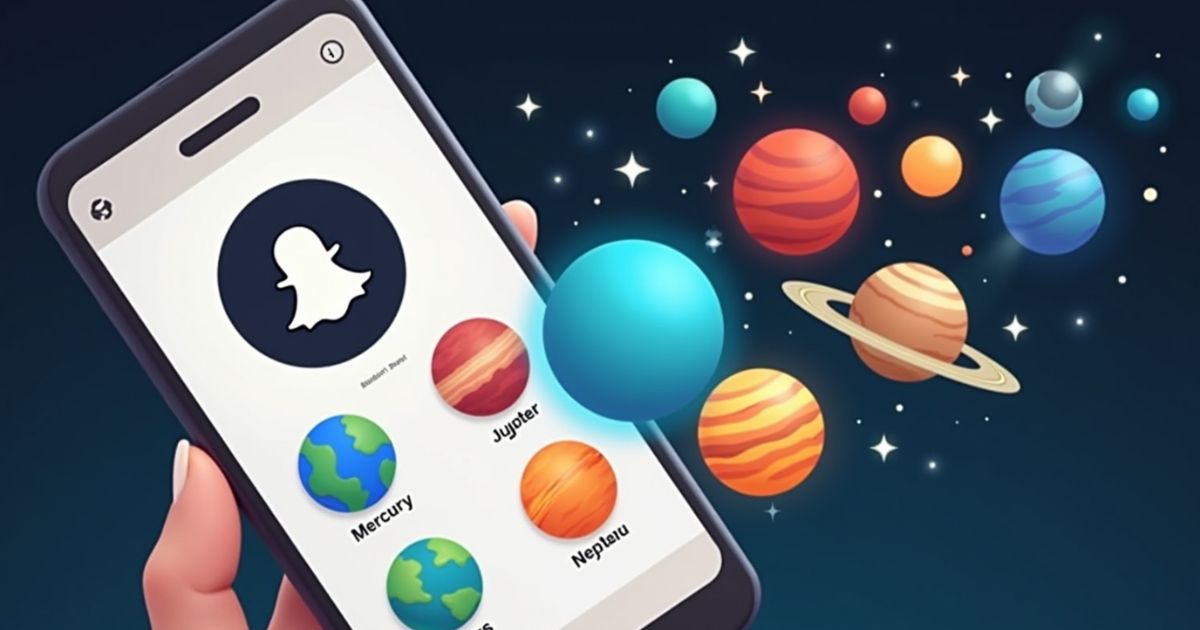
Snapchat Planets represent a creative visual ranking of your top 8 friends on the platform. Think of yourself as the sun in your own solar system. Your eight closest friends orbit around you as planets, each assigned based on how frequently you interact.
This Snapchat+ exclusive feature uses familiar celestial bodies to show your friendship hierarchy. Mercury represents your number one best friend, while Neptune indicates your eighth closest connection. It’s gamification at its finest, turning social engagement into something you can actually see and track.
The Best Friends badge appears on profiles of people in your top eight. Tap it, and you’ll discover which planet they occupy in your personal solar system.
How Snapchat Planets Work
The Snapchat friend ranking algorithm continuously analyzes your interaction patterns. It considers snaps sent, messages exchanged, voice calls made, and even story views. The system performs periodic recalculations based on your recent activity.
Your planet rankings reflect relative engagement compared to all your Snapchat contacts. Someone might be your Venus (second closest), but you could be their Neptune (eighth) in their system. These rankings are completely independent and based on individual interaction trends.
The algorithm weighs different activities differently. Two-way messaging carries more weight than one-sided snaps. Consistent daily habits matter more than occasional bursts of activity.
Snapchat+ Requirement
You’ll need an active Snapchat Plus subscription to access the Planets feature. The subscription costs $3.99 per month in the United States, though pricing varies by region.
Besides Planets, your subscription unlocks exclusive features like custom app icons, story rewatch indicators, and special Bitmoji backgrounds. The Snapchat+ subscription features aim to enhance your overall experience while supporting platform development.
Both iOS and Android users can subscribe directly through the Snapchat app settings.
Where to Find Snapchat Planets in the App
Finding your friends’ planetary rankings takes just seconds:
- Open the Snapchat app
- Navigate to a friend’s profile
- Look for the “Best Friends” badge (gold-bordered badge with two people)
- Tap the badge to reveal their planet
- View the visual representation of where they rank
The badge only appears if that person ranks in your top eight. No badge means they’re outside your closest friends circle.
Snapchat Planets in Order and Their Meanings
The Snapchat Planets order follows our actual solar system, making it easy to remember. Here’s the complete breakdown:
| Planet | Rank | Color Scheme | Hearts |
|---|---|---|---|
| Mercury | #1 | Pink/Red | 5 red hearts |
| Venus | #2 | Beige/Cream | Multi-colored |
| Earth | #3 | Blue/Green | Red hearts, moon |
| Mars | #4 | Red/Orange | Purple/blue hearts |
| Jupiter | #5 | Orange | Stars only |
| Saturn | #6 | Yellow/Gold | Stars, rings |
| Uranus | #7 | Light Blue | Green hearts |
| Neptune | #8 | Deep Blue | Blue hearts |
Mercury – Closest Best Friend
Mercury Snapchat planet represents your absolute closest friend. This person receives the most snaps from you, exchanges the most messages, and likely maintains the longest streaks.
The pink-red planet features five vibrant red hearts circling it. Getting Mercury status requires consistent daily interaction and mutual engagement.
Venus – Second Closest Best Friend
Venus Snapchat planet shows your runner-up. Still incredibly close, but just behind your top friend in overall interaction frequency.
The beige-cream colored planet displays colorful hearts (pink, blue, yellow). Venus friends typically engage with you multiple times daily but slightly less than Mercury.
Earth – Third Closest Best Friend
Earth Snapchat planet meaning indicates a solid friendship foundation. You interact regularly, maintaining consistent communication patterns.
The familiar blue-green planet includes a visible moon and red hearts with stars. This Snapchat Best Friend ranking shows reliable, ongoing engagement.
Mars – Fourth Closest Best Friend
Mars Snapchat planet represents your fourth-tier friendship. Interaction happens frequently but doesn’t match your top three connections.
The distinctive red planet features purple and blue hearts with surrounding stars. Mars friends receive regular snaps but perhaps not daily messages.
Jupiter – Fifth Closest Best Friend
Jupiter Snapchat planet marks the middle of your top eight. Communication remains consistent but less frequent than higher-ranked friends.
The orange planet with brown bands displays only stars. Jupiter rankings suggest you interact several times weekly.
Saturn – Sixth Closest Best Friend
Saturn Snapchat friend ranking shows moderate engagement levels. You connect occasionally but not as part of daily routines.
The yellow-gold planet with iconic rings features stars scattered around. Saturn friends might exchange snaps a few times per week.
Uranus – Seventh Closest Best Friend
Uranus Snapchat planet indicates sporadic but meaningful interaction. Communication happens irregularly but enough to maintain top-eight status.
The light blue-green planet displays green hearts and stars. Uranus friends stay connected through occasional check-ins.
Neptune – Eighth Closest Best Friend
Neptune Snapchat planet represents your eighth-closest friend. Minimal but present interaction keeps them in your Snapchat closest friends order.
The deep blue planet shows blue hearts. Neptune rankings require only occasional communication to maintain.
What Affects Planet Changes
Snapchat planet changes happen based on several factors:
- Snap frequency (photos and videos sent)
- Messaging consistency and response patterns
- Story views and reactions
- Streaks maintained over time
- Voice and video calls made
- Bitmoji interactions and games
The Snapchat engagement system constantly evaluates these social signals to update your rankings.
Messaging and Snap Frequency
Snapchat messaging frequency heavily influences your planet rankings. Daily snaps and messages boost positions significantly. The algorithm values activity comparison between all your friends.
Quality matters too. Meaningful conversations count more than single-word responses.
Streaks and Recency
Snapchat snap streaks impact your rankings considerably. Long streaks demonstrate consistency and commitment to maintaining connections.
Recency weighs heavily in calculations. Recent interactions matter more than old ones. Taking a week-long break from someone can drop their planet ranking dramatically.
Mutual vs One-Sided Interaction
Snapchat mutual interaction receives the highest algorithmic weight. If you both send snaps equally, your rankings rise faster.
One-sided interaction provides minimal ranking benefits. Constantly snapping someone who rarely responds won’t push them into higher planetary positions in their system (though they’ll rank high in yours).
Common Snapchat Planets Misconceptions
Let’s clear up some Snapchat planet misconceptions:
Myth: Planets show who views your profile
Reality: Profile views aren’t tracked or displayed
Myth: Opening snaps immediately affects rankings
Reality: Only sending content influences positions
Myth: You can manipulate rankings quickly
Reality: Consistent patterns matter more than sudden bursts
Do Planets Show Who Views Your Profile?
No. Snapchat profile interaction tracking doesn’t include profile views. Privacy protections prevent this type of monitoring.
Only actual engagement (snaps, messages, calls) influences your planet rankings.
Do Planets Update in Real Time?
Not exactly. While major interactions process quickly, the system uses periodic recalculations rather than instant updates.
Rankings typically refresh within hours of significant interaction shifts. Sync delays occasionally occur, especially during heavy server loads.
Can Someone See Your Planet Ranking?
No. Snapchat Planets privacy ensures friends can’t see their planetary designation in your system. Only you view your rankings. This maintains Snapchat friend planet visibility as one-directional.
Friends need their own Snapchat+ subscription to see where you rank in their solar system.
Why Snapchat Uses the Planet System
Snapchat employs the planet system for several strategic reasons:
- Increases daily habits and app engagement
- Creates incentive for paid subscriptions
- Makes friendship rankings visually appealing
- Differentiates from competitor platforms
- Gamifies social connections naturally
Snapchat Planets vs Best Friends List
Snapchat Planets vs Best Friends comparison reveals key differences:
The traditional Best Friends list shows publicly on your profile. The Snapchat solar system feature remains private to subscribers only.
Planets provide visual metaphors and detailed rankings. Best Friends simply lists names without hierarchical context.
Troubleshooting Snapchat Planets Not Showing
If Snapchat Planets not showing appears, try these fixes:
- Verify your subscription status remains active
- Update to the latest Snapchat app version
- Restart app completely and reopen
- Check friend qualifies for top eight
- Clear cache in device settings
- Reinstall if system updates don’t resolve issues
Payment failures often cause Snapchat+ Planets missing problems.
Tips for Understanding Snapchat Planets
Keep perspective when viewing your Snapchat interaction ranking:
- Don’t obsess over sudden ranking changes
- Focus on genuine connections over metrics
- Remember rankings fluctuate naturally with communication patterns
- Use planets as entertainment, not relationship validators
- Understand the algorithm rewards consistent interaction
- Maintain balance between tracking and authentic friendship
FAQs
How much does Snapchat+ cost?
$3.99 monthly in the US, with regional pricing variations.
Can I hide planets from specific friends?
No. It’s all-or-nothing with your subscription.
Do deleted messages affect rankings?
Yes. The system tracks interaction history regardless of deletion.
How often do positions change?
Rankings update throughout the day based on recent activity.
What if I lose a streak?
Broken streaks can impact rankings, but recovery happens through renewed consistent interaction.
Summary
Snapchat Planets explained simply: it’s a fun visual way to see your friendship hierarchy. The Snapchat+ Planets feature transforms abstract engagement metrics into colorful planetary rankings from Mercury (closest) to Neptune (eighth).
Remember, the Snapchat planet system exists for entertainment. Real friendships transcend digital metrics. Use these rankings as interesting insights into your communication patterns, not as definitive measures of relationship value.
Understanding how Snapchat Planets work helps you appreciate the platform’s creativity in visualizing social connections. Whether you’re Mercury or Neptune in someone’s system, what matters most is the genuine connection you share beyond the app.